
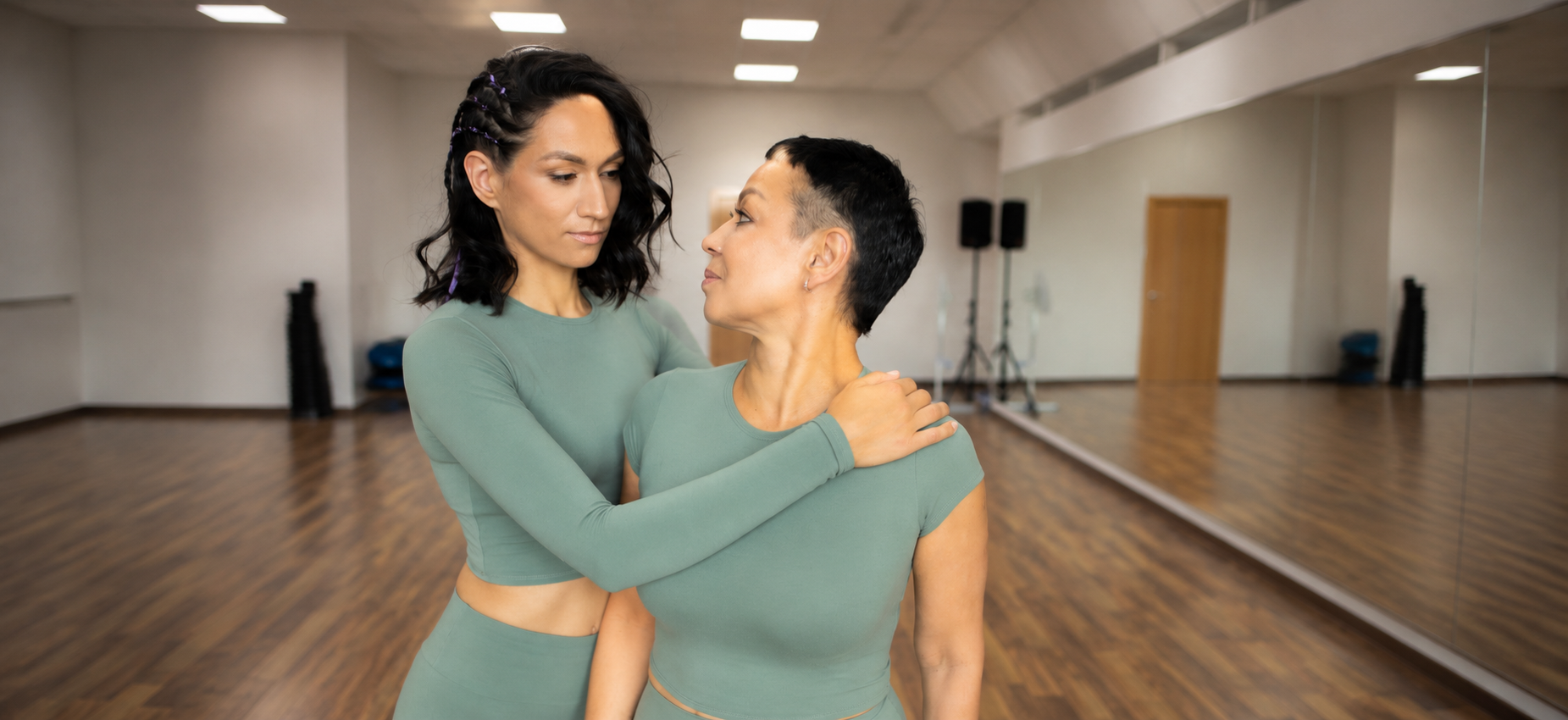
After 40, the Body Is Not Giving Up. It Needs a Different Strategy
Why midlife can become not the end of possibility, but the beginning of a smarter relationship with yourself
Author’s note: This article was partly inspired by a thoughtful conversation with Dr Shelley Harding. Her questions helped me reflect more deeply on strength, ageing and the way women relate to their bodies in midlife.
One of the most common thoughts I hear from women after 40 or 50 sounds something like this:
“Maybe it’s just age.”
A woman feels that her body has become different. She has less energy. Recovery takes longer. Stiffness appears. One shoulder aches, the back pulls somewhere, the knees become more cautious on the stairs, sleep is no longer as deep, and the old ways of quickly “getting back into shape” somehow no longer work.
And in that moment, it is very easy to decide that the body is starting to give up.
But after years of working with women, I am more and more convinced of something different.
After 40, the body is not necessarily giving up. Very often, it simply needs a different strategy.
Not the approach that worked at 25 or 35. Not random workouts whenever motivation appears. Not a harsh two-week plan that leaves a woman exhausted again. What the body often needs is a more attentive system: strength, movement, nutrition, recovery, sleep, confidence and a clearer understanding of what is actually happening.
The biggest mistake is blaming everything on age
I have worked in fitness for more than 35years, and during that time I have seen many different women.
Some have always been active. They went to group classes, ran, did yoga, Pilates, swimming, dancing or trained at the gym. Then, after 40 or 50, they suddenly felt that what used to be enough was no longer enough. Recovery became slower, muscles needed more attention, sleep had a stronger effect on how they felt, and chaotic training no longer brought the same result.
Other women come to fitness for the first time at 45, 50 or 60. They arrive cautiously, with an unspoken question inside: “I have never been sporty. Is it probably too late for me to start?”
And at that moment, it really matters that the person beside them does not pressure, frighten or rush them, but calmly shows them: no, it is not too late. You can start at any age. You simply need to start from the level that suits your body now.
There are also women who have almost stopped moving because pain, fatigue, arthritis, extra weight or low energy have convinced them that it is better to “take it easy”. They try to do less so they do not harm themselves, but over time the body often becomes weaker, more cautious and less confident.
In these stories, I see one thing in common.
A woman starts to see her body as a problem.
As if it is letting her down. As if it has become unreliable. As if age automatically takes away strength, energy and the possibility of feeling good.
But age does not explain everything.
Yes, after 40 the body changes. Perimenopause, menopause, recovery, hormonal changes, muscle mass, sleep, stress, nutrition and old injuries all matter.
But change does not mean that possibility has ended.
It means the body needs different support.
Not doing less, but doing things more precisely
After 40, many women feel there are only two choices: either train hard and tolerate it, or protect themselves and gradually do less and less.
But between these two extremes, there is a much more reasonable path.
You can start from the level that suits your body now. You can build strength gradually. You can adapt exercises for knees, back, shoulders or balance. You can learn to move more safely. You can improve nutrition not through punishment, but through support for energy and recovery. You can build strength without feeling that a workout has to destroy the whole next day.
Very often, a woman does not need harsher discipline.
She needs clarity.
What exactly is happening in the body? Where is strength missing? Where is mobility needed? Where is a medical check useful? Where is fatigue connected not with laziness, but with poor recovery, sleep, stress or nutrition? Where is the load too light to change anything? And where is it too abrupt for the body to adapt?
When a woman begins to see these connections, she stops fighting herself.
And that changes a great deal.
My own experience also supports this view
My interest in women in midlife is not only connected with professional observation. It is also connected with my own story.
I do not simply tell women that the body after 40 or 50 can become stronger. I have lived that experience myself.
In my own midlife years, I returned to serious strength training. At 54, I competed in powerlifting and set a world record.
For me, that was not only a sporting achievement. It changed my inner conversation with age.
I felt in my own body that it can adapt, learn, build strength and surprise us, even when the world around us too often says, “Well, what do you expect at your age?”
Of course, this does not mean every woman should do powerlifting. Not at all.
Strength will look different for everywoman.
For one woman, it may be a barbell. For another, her first confident strength session. For a third, returning to training, dancing or feeling steadier in everyday life.
My experience simply gave me a very deep understanding: we often underestimate what the body is capable of after 40, 50 and beyond.
The body changes, but it is still able to respond to the right kind of load.
And I want women to know this.
When a woman starts to believe herself again
The most powerful change I see in my work does not always begin with muscles.
Yes, strength improves. Movements become more confident. The body gradually responds to training. But what touches me most is the moment when a woman suddenly starts to relate to herself differently.
I remember a client who came to me at 68. It was her first real experience of fitness. She had worked in a seated job for many years, she was an accountant, she had run a business, and movement had never been a big part of her life.
A friend brought her to a group class where most people were younger. Of course, I watched her carefully, offered options where needed and adapted the load.
But what struck me was her discipline.
She did not miss a single class. Sometimes I tried to give her an easier option or a lighter weight, and she would calmly say, “No, I can do this.”
And she really could.
Gradually, she gained not only more strength. She developed a different relationship with herself: “I am coping. I can do this. My body still responds.”
I have also seen other women in their fifties and beyond walk 40 to 50 minutes to a training session, complete a strength workout and then walk back home. In any weather.
For me, this is not just discipline.
It is the moment when a woman stops seeing age as a boundary and begins to discover more strength in herself than she expected.
Strength after 40 is not only about muscles
When we talk about strength after 40, it is easy to think only about dumbbells, exercises and muscles.
But strength in midlife is much broader than that.
It is the ability to trust your body. To climb the stairs without feeling helpless. To carry bags. To get up from the floor. To go for a walk. To begin a new workout without the fear that “I won’t manage”. To wake up with a sense that you have some resource for the day. To feel that your body is not perfect, but it is alive, teachable and yours.
Of course, training matters. Strength training supports muscles, bones, balance, posture and everyday function.
But training does not exist separately from life.
After 40 and 50, many women need to relate differently to food, sleep, stress, recovery, daily rhythm and consistency. These are not separate topics living on their own. They are all part of one picture.
If a woman sleeps poorly, eats little in the morning, lives on coffee, arrives at training already depleted and then blames herself for not being motivated, the problem is not her character.
We need to look wider.
This is where health coaching becomes very important. Not instead of training, but alongside it.
Because sometimes a woman needs more than an exercise plan. She needs to understand how her ordinary day affects her body, energy, recovery and ability to stay consistent.
The main shift begins in the mind
For me, the main shift after 40 sounds like this:
“My body is not failing. My body is changing, and I need to support it differently.”
This thought is simple, but it can change a great deal.
As long as a woman thinks, “I am getting older, so I need to do less”, her life often gradually becomes smaller. Less movement. Less load. Less confidence. Less new experience. Less trust in the body.
But when the thought changes, another path appears.
“My body is changing, so I need a smarter strategy.”
This is not denial of age.
It is respect for the body.
Not ignoring pain, but understanding it. Not training through damage, but choosing the right load. Not waiting until energy magically appears, but creating the conditions where energy can return. Not trying to be the same as at 30, but building strength for the life you have now.
For many women, this becomes very freeing.
Because the problem no longer looks like a personal failure.
It becomes something you can work with.
Midlife can be a strong stage
I do not like the idea that after 40 a woman should simply accept a gradual decline in strength, energy and possibility.
Yes, we cannot ignore biology. Recovery, hormones, sleep, nutrition, stress, muscle mass and medical factors really do matter.
But we can influence far more than many women think.
We can build strength. Improve balance. Support bones. Work on mobility. Rebuild confidence in movement. Create more stable habits. Learn to recover. Choose a load that supports rather than depletes.
And sometimes the most beautiful part of this work is seeing how a woman gradually moves from one thought:
“I am too old for this.”
to another:
“I can do more than I thought.”
For me, this is the meaning of my work.
Not to force a woman to become someone else.
But to help her see that her body can still be strong, teachable and reliable.
After 40, life does not end the conversation with the body.
It simply asks us to begin that conversation differently.
Want support beyond this article?
