
When Someone Is Waiting for You
Why Community Helps Women Return to Movement
Sometimes consistency begins with something very simple: someone is expecting you.
It might be a group, a dance class, a fitness studio, or a one-to-one personal training session. The format may be different, but the essence is similar: movement starts to have a human connection.
You come to a place where people know your name. They notice how you are feeling. They are glad to see you after you have missed a session. The trainer remembers that your knee was sore, that you slept badly last week, that you have been worried about your weight, or that you have been meaning to start again for a longtime.
For many women40+, this becomes the missing link that helps them move more regularly.
Fitness is not held together by discipline alone
We often think about fitness as personal willpower: decide, get ready, go, do it.
But real life for a woman after 40 is rarely that simple.
There is work. Family. Children. Parents. Home. Responsibility. Poor sleep. Fatigue. The evening when you just want to sit down and not have anyone need anything else from you.
In that kind of life, exercise becomes easier when it is connected to people.
There is the familiar face of a trainer. A group that feels calm and warm. A person who is waiting for you at your session. A feeling that says, “I will go, and I will feel good there.”
Sometimes that feeling is exactly what helps a woman leave the house.
Community can be big, or very personal
I have worked in fitness for many years, and I have seen the power of community from different sides.
When I owned a large family fitness club, community was one of the main reasons people kept coming back. They came for training, but they also came to familiar people, a familiar place, small conversations, smiles, and little rituals.
Someone met a friend before class. Someone brought their children. Someone said hello to the trainer and already felt part of the space.
Later, when I had a boutique studio for exclusive personal training, community looked different. There were fewer people, more personal attention, and more trust. But human connection played the same important role.
In personal training, I often hear one sentence: “I know you are waiting for me, so I come.”
This is a very important part of a trainer’s work. Good personal training is not only built from exercises, sets, and technique. It is built from contact, attention, conversation, support, accountability, and the feeling that there is someone beside you, guiding you through the process.
Personal training creates connection too
We often imagine community only as a group. But the connection between a trainer and a client can also become a small, very strong supportive space.
When a woman comes to a personal training session, she receives more than a program. She has a regular meeting with someone who knows her body, her goals, her fears, her strengths, and her real limitations.
A trainer sees when she is tired. Notices when she has become more confident. Adjusts the load when the week has been heavy. Reminds her about recovery. Asks how she slept. Helps her return after a pause. Holds the focus when motivation rises and falls.
This is why personal training often works more deeply than a plan done alone. The client feels connection and responsibility, but this responsibility does not press on her. It supports her.
You know someone is waiting for you. And you come.
Why this matters so much after 40
After 40, many women want to move, but they are looking for a different kind of experience.
They may be bored with training alone. They may feel uncomfortable in a large gym. They may want a group, but a small and calm one. They may want a trainer who sees the person, not just someone who leads a class. They may want connection, but without noise, pressure, or comparison.
At this age, fitness becomes much more than “doing a workout”.
It is a way to bring rhythm back into the week. To leave the house. To move the body. To meet people. To gain energy. To laugh. To talk. To feel part of life again, not only the person who is always responsible for everyone else.
For older women, social support can be especially valuable. When a person goes out less, sees people less often, and loses familiar social connections, the body and mood can become more sensitive. A supportive place for movement can be a clear and gentle way to bring not only physical activity, but also human contact, back into everyday life.
A small group has its own feeling
A big fitness club suits many people. It offers choice, equipment, timetable, and energy.
But a small group is no less valuable.
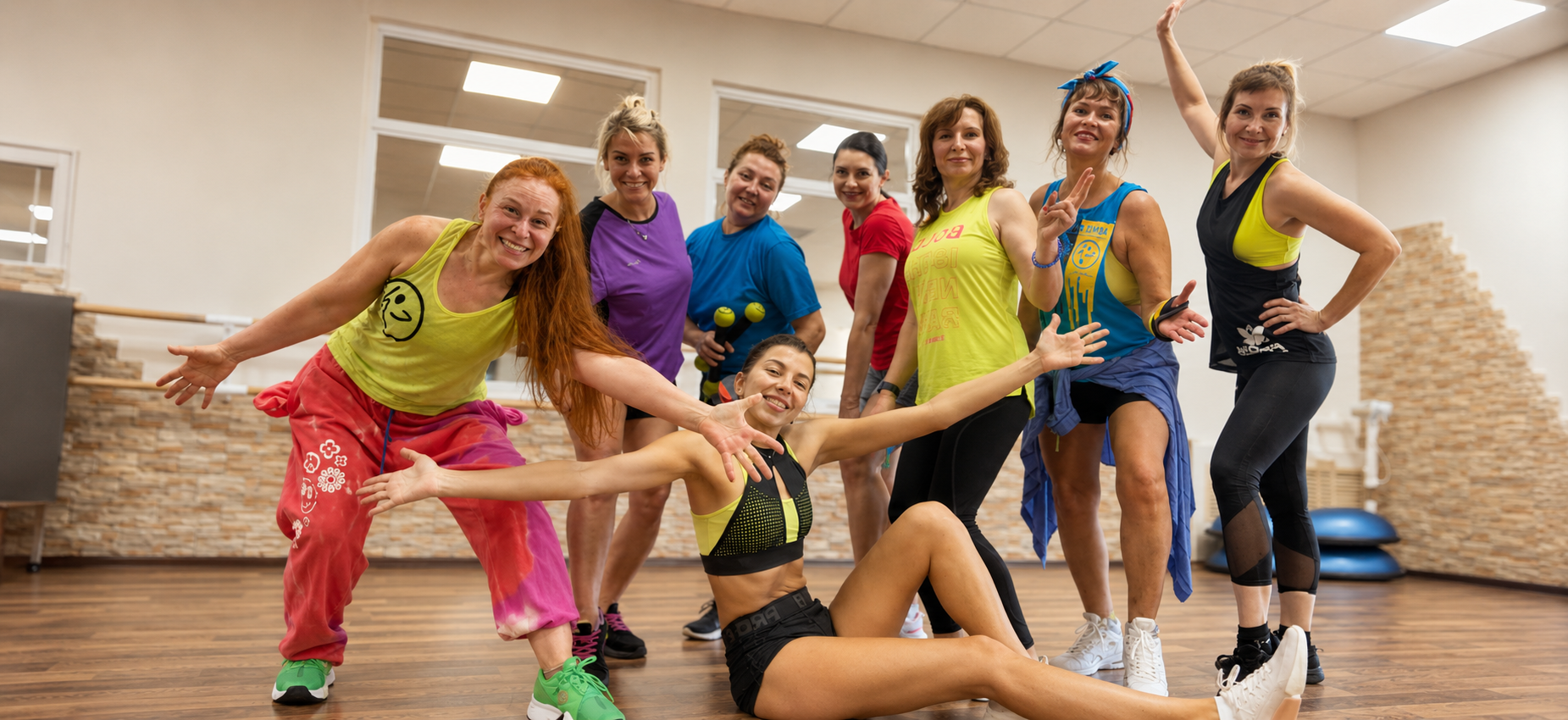
In a small group, it is easier to feel seen. Easier to ask a question. Easier to return after missing a session. Easier to move at your own pace. Easier to feel that the women around you are also starting again, also get tired, and also want strength, energy, and confidence.
For women 40+,this can matter a great deal.
Especially when the class includes music, gentle strength, balance, coordination, mobility, attention to technique, and respect for different levels of fitness. These classes give the body a training stimulus, and they give the person a lift in mood.
Sometimes after a good group session, a woman does not go home simply tired. She goes home feeling more alive.
When connection helps consistency
Consistency is rarely built on motivation alone.
Motivation changes. Mood changes. A week can be heavy.
But connection with people can help you hold the rhythm.
You know the class will happen at the same time. You know the trainer will recognise you. You know that after movement you usually feel a little better. You know there is a place where you can arrive as you are today.
This makes movement part of life, not another self-improvement project.
That is why community is becoming an important conversation in fitness again. People are not only looking for exercises. They are looking for a real experience, contact, support, belonging, and the feeling that fitness can be human.
Sometimes it begins with the feeling: “I am welcome here”
Fitness becomes much easier when the space suits the person.
When the trainer is attentive. When the group is kind. When the load is sensible. When there is respect for age, experience, body, and mood. When movement is connected with warmth, not pressure.
Community can look different. Sometimes it is a few women in a park. Sometimes it is a dance group. Sometimes it is a session with a friend at the gym. Sometimes it is a personal training appointment where the trainer is waiting, supporting, and guiding.
What matters is that a woman finds a place where movement can become part of life.
Sometimes the missing part is a place where you feel welcome.
If you are a woman 40+ in Eastern Sydney and you would like to start gently, you can message Irina through the website or send a message to ask which format may be the best place for you to begin.
What to try tomorrow
If you feel that exercising alone is difficult, try not to begin with a big decision. Begin by looking for the right space.
1. Remember where you usually feel calm around people.
A park, a small studio, a dance class, an outdoor group, a walking group, a personal session, or gentle strength training. Choose an environment you could realistically imagine returning to.
2. Think about which format feels closer to you right now.
For one person, a small group is right. For another, calm personal training. For someone else, dance. For someone else, walking with people. A good format should suit your body, your personality, and your current level of energy.
3. Message the trainer beforehand.
You can ask whether the class suits your level, whether there are options for beginners, how the session works, and what to bring. That first contact often removes half of the anxiety.
4. Agree with yourself to come once.
Once is easier than “now I am starting a new life”. Come, try it, feel the atmosphere, and notice how your body and mood respond.
5. Pay attention to the people.
It matters how you were welcomed, how things were explained, whether the trainer watched technique, and whether there was respect, warmth, and calm. Atmosphere is part of fitness too.
6. After the session, ask yourself: “Do I feel a little easier in my body, in my breathing, in walking home, in being in this day?”
This is a good question. Sometimes the body and mood answer before the mind does.
Useful sources
1. AUSactive - Top 20 Australian Fitness Trends for 2025–26 - Supports the point that fitness programs for older adults, group fitness, personal training, mobility/recovery, and exercise for mental health are current Australian fitness trends.
2. Heart Foundation Walking - An Australian example of community-based movement: the program supports individuals and groups to move more and join a walking community.
3. World Health Organization - Mental health of older adults - Supports the idea that social connection is especially important for older adults, and that loneliness and social isolation are risk factors for mental health in later life.
4. Australian Government - 24-hour movement guidelines for all Australians — Supports the recommendations for regular physical activity, muscle-strengthening activities, and functional activities targeting mobility, balance, and coordination.
5. Lindsay Smith et al., 2017 - The association between social support and physical activity in older adults: a systematic review - A systematic review supporting the association between social support for physical activity and physical activity levels in older adults.
6. Baez et al., 2017 - Effects of online group exercises for older adults on physical, psychological and social wellbeing: a randomized pilot trial - A pilot trial exploring group exercise for older adults and the possible role of social context in adherence.
Want support beyond this article?
